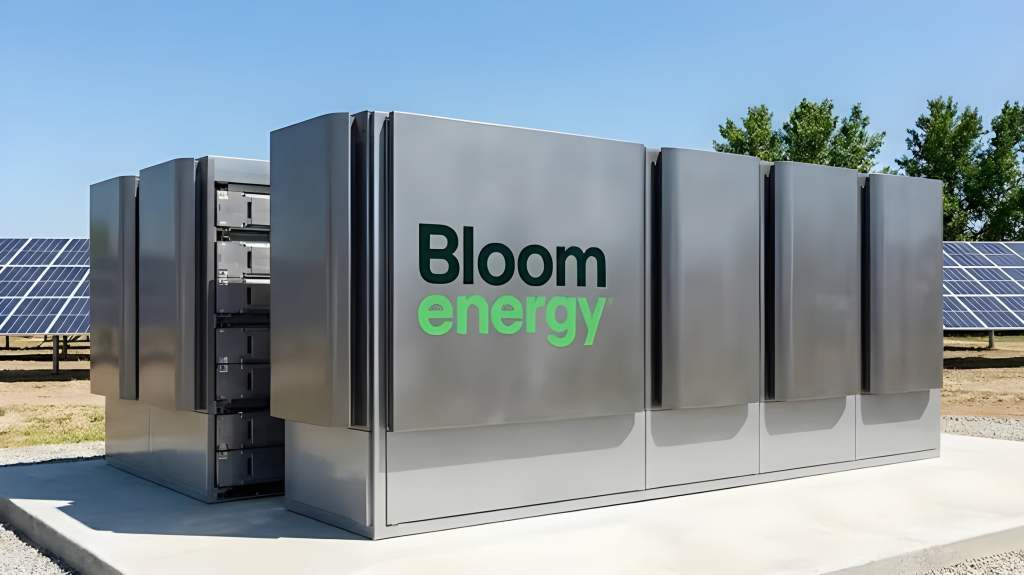
Company: Bloom Energy Corporation
Ticker: NYSE: BE
Sector: Industrials
Current Share Price: $289.15
Market cap: $85.16B
Business Overview
Bloom Energy Corporation is an energy technology company focused on providing reliable, onsite electricity through its solid oxide fuel cell technology. The company is becoming increasingly relevant to the growing demand for electricity from data centers, particularly as artificial intelligence (AI) drives higher computing workloads and greater power consumption.
Their core product, the Bloom Energy Server, uses an electrochemical process to convert fuels into high efficiency electricity without combustion. The systems can operate continuously, work alongside the traditional power grid, support microgrids, or function as standalone power sources.
Bloom Energy’s customers include data centers, semiconductor manufacturers, utilities, and other commercial and industrial companies. By the end of 2025, the company had deployed approximately 1.8 GW of capacity across 1,100 sites in nine countries.
The growing electricity requirements of AI and data centers provide an important potential growth driver. Bloom Energy’s onsite generation can help customers deploy power faster in locations where traditional grid capacity and infrastructure may take years to develop.
Investment Summary
From an investor’s perspective, Bloom Energy’s appeal lies in the combination of rapid revenue growth and a potentially large structural demand opportunity driven by rising electricity consumption. BE reported $1.065 billion in revenue during the second quarter of 2026, a 165.5% increase from the same quarter a year earlier. The company also raised its full year 2026 revenue guidance to $3.9 billion-$4.2 billion.
BE’s growth is supported by the increasing demand for electricity from AI and data centers, along with its expansion into onsite power generation. The company also recently reached an important milestone by joining the S&P 500 on September 21, 2026.
The S&P 500 addition is significant because BE is now included in one of the most widely followed U.S. stock market indexes. This reflects the company’s growth in market capitalization and its position as a larger publicly traded company.
At the same time, the company’s valuation has increased significantly along with its stock price. As of September 29, 2026, Bloom Energy had a market capitalization of approximately $85 billion. This means investors are placing a high value on the company’s expected future growth.
Industry & Competition
Competitive Landscape
- Natural gas generation: Gas reciprocating engines and small gas turbines are the most direct alternatives, and they’re already widely deployed. BE’s 10-K notes that major turbine manufacturers are supply constrained. BE is positioning itself as an alternative when customers need capacity sooner.
- Combined cycle plants: These remain an established option for large scale power generation. However, projects that rely on traditional infrastructure can take longer to develop, which gives BE an opportunity when customers prioritize speed.
- Solar and battery storage: Falling costs and improving performance could make solar plus storage more competitive for customers and reduce demand for BE’s systems. The company identifies improving competing technologies as a risk to its business.
- Wind and storage: Wind faces additional limitations for customers that need power at a specific location because projects depend more heavily on available land, transmission infrastructure, and permitting.
- Nuclear (SMRs): Small modular reactors could become a longer term competitor for customers looking for large amounts of continuous power. For BE, however, the current opportunity is partly tied to the much longer timelines associated with developing new traditional power infrastructure.
- Diesel generators and traditional backup. These remain an established option for customers that need backup electricity. They are less directly comparable to BE’s broader onsite power strategy but still compete for projects where reliability is the main priority.
- Other fuel cells. BE also competes with other fuel cell technologies, including PEM, MCFC, and PAFC systems.
BE also faces competition that goes beyond the technology itself. Its 10-K points to competitors with greater financial resources and established customer relationships. For large customers such as data center operators, an established supplier can have an advantage when reliability and execution are critical.
Competitive Position
Bloom Energy’s biggest opportunity is the growing importance of time to power. Electricity demand is rising faster than some grid and generation infrastructure can be built, while new grid connections can take years. At the same time, traditional turbine and engine suppliers are dealing with longer delivery timelines. This creates an opening for BE to provide customers with additional power without waiting for major grid upgrades or conventional generation equipment.
That makes deployment speed one of BE’s most important competitive advantages. The company says its systems can be deployed in weeks or months depending on the project, with some projects reaching power availability in approximately 90 days. BE is also trying to strengthen this advantage through Power Connect, introduced in August 2026, which the company says can reduce onsite installation time by more than 40%.
For investors, the important question is whether this advantage is temporary or durable. BE benefits if grid constraints and equipment shortages continue while AI data centers keep increasing electricity demand. However, if grid capacity improves, traditional generation becomes easier to obtain, or competing technologies become more cost effective, the company could face greater pressure on future growth.
Ultimately, Bloom Energy’s competitive position comes down to whether customers continue to value getting power faster enough to choose BE over other power options. If the current power shortage persists, BE has a larger market opportunity. If power becomes easier to get, BE will have to prove that its systems are still a good option based on cost and value rather than speed alone.
Financial Analysis
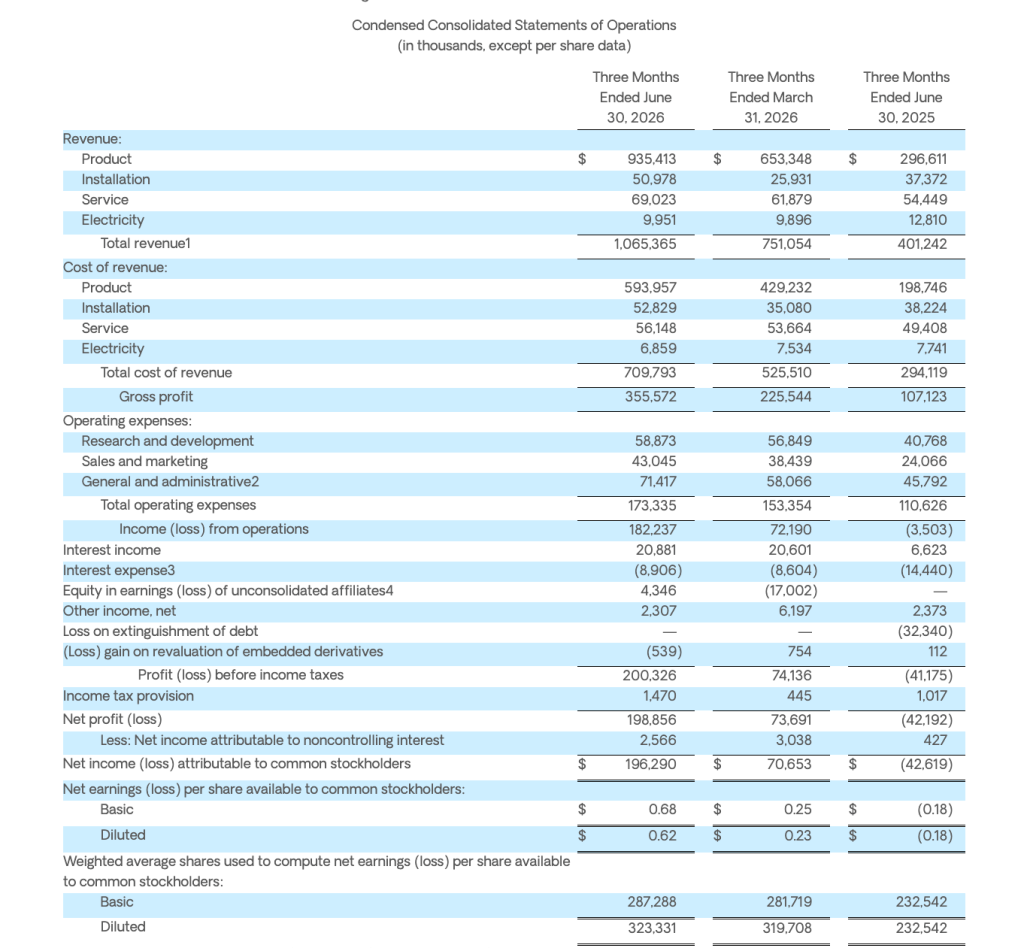
Bloom Energy showed strong revenue growth in Q2 2026. Revenue was $1.065 billion, compared with $751 million in Q1 2026 and $401 million in Q2 2025. This represents about a 42% increase from the previous quarter and a 166% increase year over year.
The largest source of revenue was Product revenue, which increased from $296.6 million in Q2 2025 to $935.4 million in Q2 2026. Installation revenue also increased to $51.0 million, while service revenue increased to $69.0 million. Electricity revenue was $10.0 million, which was lower than the $12.8 million reported in Q2 2025.
BE’s gross profit increased significantly from $107.1 million in Q2 2025 to $355.6 million in Q2 2026. Its gross profit margin also improved from about 26.7% to 33.4%, showing that the company kept more revenue after its costs of revenue.
The company also moved from an operating loss of $3.5 million in Q2 2025 to operating income of $182.2 million in Q2 2026. Net income attributable to common stockholders was $196.3 million, compared with a $42.6 million loss in Q2 2025. Diluted earnings per share increased from -$0.18 to $0.62.
Overall, the financial results show rapid revenue growth, improving margins, and a major improvement in profitability.
Growth Drivers & Catalysts
- AI Data Center Growth
The rapid growth of AI is increasing electricity demand from data centers, while limited grid capacity can delay new projects. BE’s onsite power systems give data centers another option for getting power online faster.
- Backlog
| Nebius | $1.7B project investment supporting BE’s fuel cell deployment for AI infrastructure |
| Equinix | More than 100 MW across 19 data centers |
| MiTAC Computing | Expanded fuel cell microgrid partnership |
| AEP | Partnership for onsite power applications |
| Quanta Computer | Expanded agreement to power AI related computing infrastructure |
| Oracle | Up to 2.8 GW, with 1.2 GW initially contracted |
| Brookfield | AI infrastructure framework expanded from $5B to $25B |
- New 800V DC Technology
BE has introduced an 800V DC power solution designed for next generation AI data centers. The main opportunity is cost and efficiency. BE estimates its system could reduce non compute capital costs by $3.6 billion for a 1 GW data center.
- Expansion Across the AI Supply Chain
BE is expanding beyond traditional data center customers into other parts of the AI infrastructure market, including AI server manufacturing and computing infrastructure.
- Faster Deployment
Getting power online quickly is becoming increasingly important for data centers. BE’s Power Connect system is designed to reduce onsite installation time by more than 40%. Faster deployment could help BE win projects where customers cannot afford to wait years for additional grid capacity.
- Growing Financial Momentum
BE’s strong 2026 revenue growth, improving margins, and increased full year guidance provide financial support for continued expansion.
- Addition to the S&P 500
BE was added to the S&P 500 on September 21, 2026. The addition increases BE’s visibility among institutional investors and means funds that track the index may need to hold the stock. More importantly, it marks a significant change in BE’s size and position in the public market.
For investors, the S&P 500 addition is more of a visibility and demand catalyst than a direct business growth driver. Its long term importance will depend on whether Bloom Energy can continue growing enough to support its much larger market valuation.
Valuation
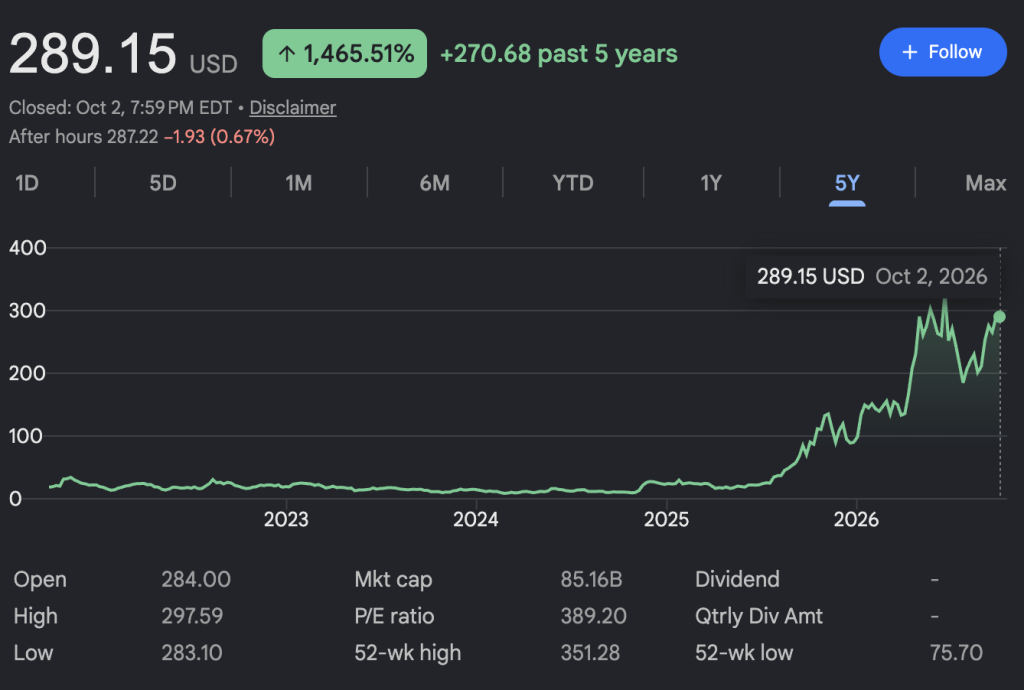
Can Bloom Energy grow earnings rapidly enough to justify today’s elevated valuation and drive meaningful P/E compression over time?
BE currently trades at roughly 96-108 times its 2026 forward adjusted earnings, based on management’s $2.55-$2.85 EPS guidance. This is a high valuation, meaning investors are already expecting significant earnings growth as BE expands its AI and data center power business.
The main question is whether BE can grow earnings fast enough to support the current share price. If earnings grow faster than expected, the valuation could become more reasonable over time. If growth slows, the high valuation could put more pressure on the stock.
Overall, BE is a high growth, high expectations investment. Its growth opportunity is already reflected in the stock price, so future earnings growth will be especially important.
Risks
- AI/data center power demand growing more slowly than expected
- Delays in converting announced agreements into revenue
- Margin pressure as BE scales production
- Competition from grid power, natural gas generation, batteries, nuclear and other technologies
- Customer concentration
- Higher than expected capital requirements
- A decline in the valuation multiple applied to future earnings
Bull Case vs. Bear Case
| Bull Case | Bear Case | |
| AI power demand | Rapid growth in AI/data center electricity demand creates a large market for onsite power. | AI power demand grows, but competing technologies and grid expansion capture much of the opportunity. |
| Revenue growth | BE sustains strong growth as Oracle, Equinix, Nebius and other customers expand deployments. | Large announced opportunities take longer to turn into actual deployments and revenue. |
| Margins | Manufacturing scale, product mix, and operating leverage drive further margin expansion. | Pricing pressure, manufacturing costs, or customer concentration limit margin improvement. |
| EPS growth | EPS grows rapidly, allowing earnings to catch up with the current stock price. | EPS growth falls short of expectations, making the current valuation harder to support. |
| Technology | BE’s systems provide fast, reliable onsite power where grid capacity is constrained. | Natural gas generation, batteries, renewables, nuclear, or other power solutions become more competitive. |
| Contracts | Major partnerships develop into multi year revenue and significant deployed capacity. | Some announced agreements are potential opportunities rather than guaranteed revenue. |
| Valuation | Investors continue paying a premium because of BE’s growth and position in AI power infrastructure. | Growth slows and investors place a lower valuation on BE as the company becomes more mature. |
Conclusion
Bloom Energy has a strong growth opportunity as rising AI and data center electricity demand increases the need for reliable onsite power. The company’s rapid revenue growth, improving profitability, and expanding customer opportunities support the long term growth story.
However, the stock’s high valuation means a lot of future growth is already priced in. The most important things to watch are whether BE can continue growing EPS, expand margins, turn major opportunities into revenue, and maintain strong cash flow as competition increases.
Bottom line: BE has significant growth potential, but the current valuation leaves little room for disappointing results. The investment case ultimately depends on whether BE can grow its earnings fast enough to justify the expectations already built into the stock price.
Sources
- https://investor.bloomenergy.com/overview/default.aspx
- https://www.bloomenergy.com/technology/
- https://investor.bloomenergy.com/press-releases/press-release-details/2026/Bloom-Energy-Reports-Record-Second-Quarter-2026-Financial-Results-and-Raises-Full-Year-2026-Guidance/default.aspx
- https://investor.bloomenergy.com/press-releases/press-release-details/2026/Bloom-Energy-and-Oracle-Expand-Strategic-Partnership-to-Deploy-up-to-2-8-GW-to-Accelerate-AI-Infrastructure-Build-Out/default.aspx
- https://investor.bloomenergy.com/press-releases/press-release-details/2026/Brookfield-and-Bloom-Energy-Expand-AI-Infrastructure-Partnership-to-25-Billion-Fivefold-Increase-to-Build-and-Finance-Rapid-Power-for-AI-Infrastructure/default.aspx
- https://d18rn0p25nwr6d.cloudfront.net/CIK-0001664703/1259d63b-8944-40da-974c-451082d403f8.pdf
- https://investor.bloomenergy.com/press-releases/press-release-details/2026/Bloom-Energy-Introduces-Power-Connect-Cutting-Onsite-Power-Installation-Time-by-Over-40/default.aspx
Disclaimer: This post reflects my personal research and opinions and is for educational purposes only. It is not financial advice.


Leave a comment